Meet Elder Anan Xola Lololi

Published: March 2026
Author

Planting Seeds of Change Through Black Food Sovereignty
Black Food Sovereignty (BFS) is more than just an agricultural movement. It’s a crucial framework for addressing systemic inequalities and fostering community resilience within Black communities. Rooted in the principles of self-determination, cultural reclamation, and economic empowerment, BFS seeks to redefine the relationship Black communities have with food and land. This movement not only aims to ensure access to healthy, culturally appropriate food but also strives to dismantle the historical and ongoing barriers that have marginalized Black farmers and consumers.
Elder Anan Xola Lololi, a pioneering force in sustainable food systems development, offers an in-depth perspective on the history and current state of BFS. Lololi co-founded the Afri-Can FoodBasket (AFB) in 1995, a non-profit organization promoting food justice in Canada. Currently, he serves as the interim Executive Director of the Black Food Sovereignty Alliance, a collective of Black sustainable food systems folks that highlight, uplift, and advocate for Black food stakeholders.
Understanding Black Food Sovereignty
The historical context of BFS is deeply intertwined with the legacy of slavery, colonization, and systemic racism. Post-slavery, many Black individuals associated farming with the oppressive conditions of plantations, leading to a generational disconnect from agriculture. Anan recalled a statement from a conversation between food activists Chris Bolden Newsom and Leah Penniman: “the land was the scene of the crime but not the criminal” (Williams, 2022). This detachment has been further exacerbated by systemic barriers that have limited Black access to land, resources, and markets in Canada.
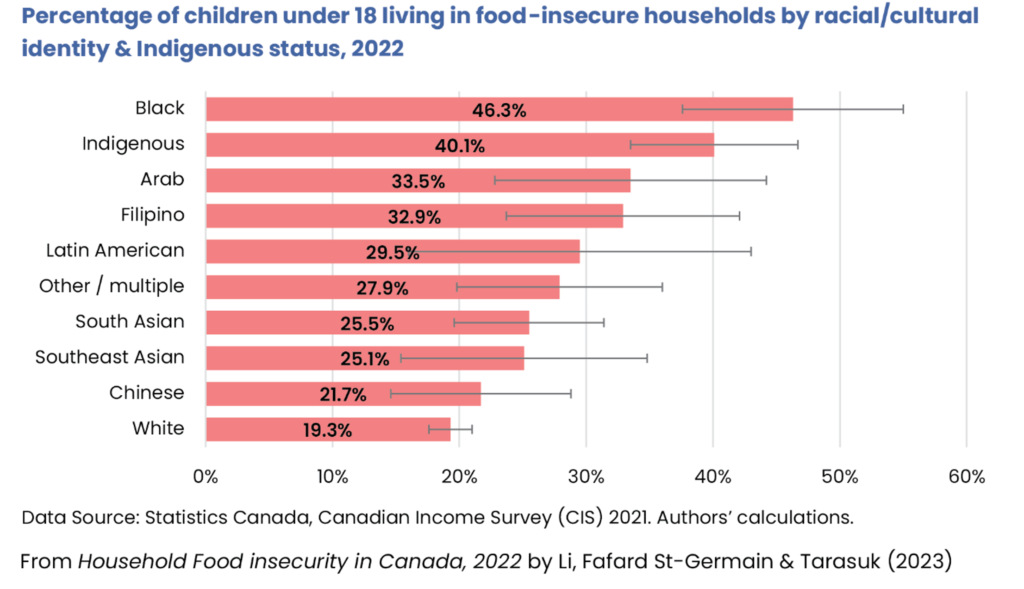
In Canada, the existing food system is predominantly shaped by white agricultural practices and policies, reflecting a broader colonial framework. Lololi points out that “the food system in Ontario is a white food system because of colonization. They bring what they know. They eat what they know.” This exclusion from the mainstream food system has resulted in disproportionate food insecurity within Black communities. Recent data reveals that Black individuals experience the highest rate of food insecurity in Canada, with 39.2% living in food-insecure households, a stark contrast to the 15.3% among white individuals. Furthermore, nearly half (46.3%) of Black children lived in food-insecure households in 2022, compared to 19.3% of white children. These statistics underscore the profound racial disparities in food insecurity and highlight the urgent need for systemic change (PROOF, 2023).
BFS is fundamentally about empowering Black communities to control their food systems, defining how food is produced, distributed, and consumed in ways that align with cultural values and community needs. Lololi underscores the importance of community engagement and ownership, “We need to have a say in how our food is grown, processed, and distributed. It’s about reclaiming our right to healthy, culturally appropriate food.” This focus is crucial in a context where Black farmers represent less than 4.9% of all farmers in Canada, highlighting the need for greater inclusion and support (Statistics Canada, 2023).
Systemic Implications
The implications of BFS extend beyond food security to encompass economic empowerment, cultural identity, and health. For instance, the prevalence of diabetes among Black individuals is nearly double that of the general population, reflecting broader disparities in access to nutritious food and healthcare. By promoting community-led efforts in urban farming, farmer’s markets, and educational programs on nutrition, BFS not only seeks to mitigate these health disparities but also empowers Black communities to reclaim their health and well-being.
Economically, BFS aims to create opportunities for Black farmers and food entrepreneurs, challenging the economic inequities that have historically marginalized Black participation in agriculture. Lololi emphasizes the need for equitable resource distribution, stating, “If we make up 10% of the population, we should be getting 10% of the net earnings.” This approach is essential for building sustainable community-driven economies. By directly supporting Black farmers and food entrepreneurs, BFS addresses critical gaps in access to financial resources. This is particularly important given that recent data reveals only 10% of Black entrepreneurs feel they are getting the support they need (Bain Interview, 2023).
Mobilizing for the Future
A critical aspect of BFS is its emphasis on youth leadership and education, ensuring the movement’s sustainability while addressing broader socio-economic challenges. Lololi emphasizes, “we need young Black leaders to step into roles across the agricultural sector to carve the path forward.” This issue is particularly urgent, as about 11 percent of youth aged 15-24 are unemployed, while the rate for young Black Canadians is significantly higher at around 17.5 percent (Statistics Canada, 2024). By empowering youth with opportunities in agriculture and food education, BFS nurtures future leaders while also preserving cultural heritage.
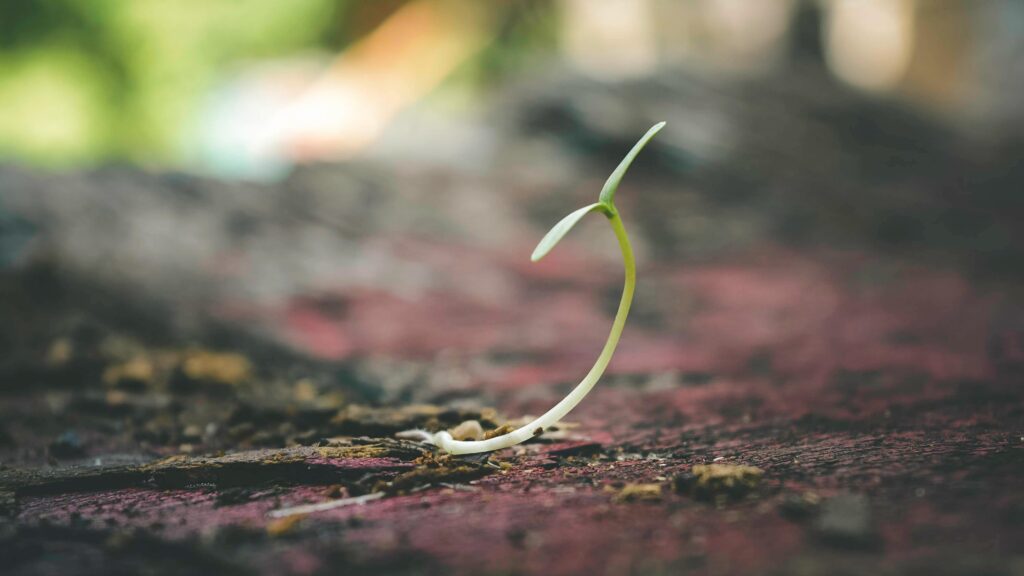
BFS is more than a response to food insecurity, it’s a comprehensive approach to addressing systemic inequities and empowering Black communities. As Elder Anan’s insights reveal, this movement is deeply rooted in historical resilience and cultural pride. By reclaiming control over food systems, Black communities can build a more equitable and sustainable future. Just as seeds sprout into new life, seeds of change can grow into transformative progress.
- Ahmed-Omer, D., Abdi, S., Eggenberger, M., Manicom, D., Sule, B., & Sood, S. (2023). Understanding and removing barriers to Black entrepreneurship in Canada. Bain & Company. Retrieved from https://www.bain.com/insights/understanding-and-removing-barriers-to-black-entrepreneurship-in-canada/
- Li, T., Fafard St-Germain, A.-A., & Tarasuk, V. (2023). Household food insecurity in Canada 2022. PROOF. Retrieved from https://proof.utoronto.ca/wp-content/uploads/2023/11/Household-Food-Insecurity-in-Canada-2022-PROOF.pdf
- Statistics Canada. (2024). Labour force survey, December 2023. Retrieved from https://www150.statcan.gc.ca/n1/daily-quotidien/240105/dq240105a-eng.htm
- Statistics Canada. (2023). A story about the diversity of Canada’s farm operators. Retrieved from https://www150.statcan.gc.ca/n1/pub/96-325-x/2021001/article/00017-eng.htm
- Williams, O. (2022). Land justice and liberation: A conversation with Leah Penniman of Soul Fire Farm. Stepping into Truth. Retrieved from https://www.steppingintotruth.com/e/leah-penniman/

© 2018 Network for the
Advancement of
Black Communities.
All Rights Reserved.
Menu
Menu