In a compelling conversation with Cashawn Myers, executive director and co-founder of HABESHA Inc., the ties between agriculture, colonialism, and systemic oppression are examined through the lens of Reparative Agriculture. Rooted in a profound history and a vision for a self-sufficient future, Reparative Agriculture is a philosophy and practice that aims to heal the wounds inflicted by centuries of exploitation by transforming agriculture from a tool of oppression into one of empowerment and healing. Myers’ journey and insights provide a deep understanding of how agriculture bridges the past and future, paving the way for healing and liberation for people of African descent.
A Journey Rooted in Heritage
Growing up in Woodbine, a rural town in Southeast Georgia, Myers was surrounded by family farms. His early experiences on his grandfather’s farm instilled in him a connection to the land, albeit one he initially resisted. “My first job was on a farm when I was seven, working on my grandfather’s farm picking up horse manure and cow manure in the summer. I hated it at the time,” Myers recalls. It wasn’t until his time at Florida A&M University that Myers began to delve into his African heritage and holistic health, sparking a transformation in his relationship with food and farming.
Myers’ work with HABESHA, Inc, an organization dedicated to leadership cultivation through practical experiences in agriculture, entrepreneurship, and cultural education, is a testament to the transformative power of connecting with one’s roots. Established in 2002, HABESHA Inc. focuses on creating sustainable agricultural practices and holistic health initiatives.
Reparative Agriculture: A Vehicle for Liberation
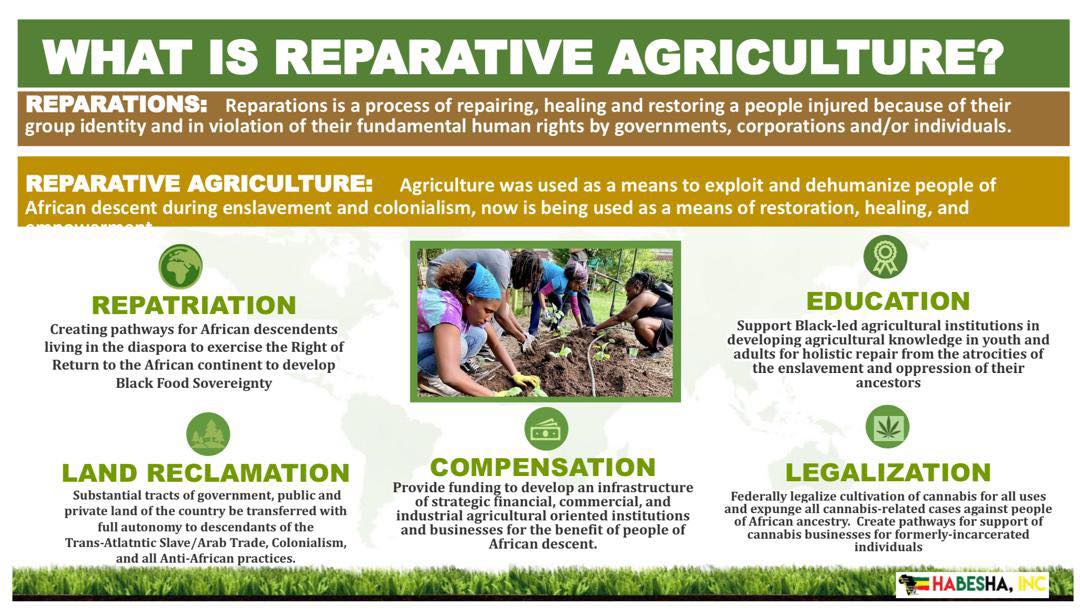
Reparative agriculture, as defined by Myers, is more than a method of farming; it is a philosophy and a movement aimed at addressing historical injustices. “For us, Black Food Sovereignty is the destination, and Reparative Agriculture is one vehicle to reach that destination,” he explains. It’s about using agriculture, which our ancestors were exploited for, as a means to heal and liberate us from the lasting effects of the transatlantic slave trade, colonialism, and modern-day forms of oppression.
Encompassing modern practices such as organic, sustainable, and regenerative agriculture through a Pan-African lens, Reparative Agriculture goes beyond food production. It is about reclaiming and revitalizing African cultural practices and knowledge systems.
The philosophy is anchored in five key pillars of restoration and healing:
- Education: Creating institutions and programs to reconnect people of African descent with the land and agricultural practices.
- Legalization: Advocating for the legal rights and opportunities for African-descended people, where many have been disproportionately criminalized.
- Compensation: Seeking financial reparations for the descendants of enslaved Africans, recognizing the economic foundations built on their ancestors’ labor.
- Restoration: Reviving and maintaining African agricultural traditions and knowledge, ensuring they are passed down and adapted for contemporary use.
- Preservation: Reinforcing the cultural and historical significance of agriculture within the Black community, fostering a sense of pride and ownership.
The Path to Black Food Sovereignty
Myers’ journey from a reluctant farmhand to a pioneering advocate for Black food sovereignty is a testament to the transformative power of reconnecting with the land. “We saw agriculture not just as a way to grow food but as a path to reclaim our health, identity, and connection to nature,” Myers explains.
One notable example is Organic Fest, Atlanta’s first vegan festival, which Myers and friends launched as a small community event in 2004. Celebrating its 20th anniversary this year, it has since grown into a major celebration of veganism and sustainable agriculture. “We wanted to break the myth that connecting with the land is akin to slavery or oppression,” Myers states. “Our aim was to seed a movement that was unapologetically Black and Green.”
Myers’ insights light a path forward, one that is deeply rooted in history and poised to cultivate a future of health, autonomy, and cultural pride for people of African descent. By reclaiming agricultural knowledge and practices, Black communities can build resilient, self-reliant food systems that honor their heritage and support their well-being.